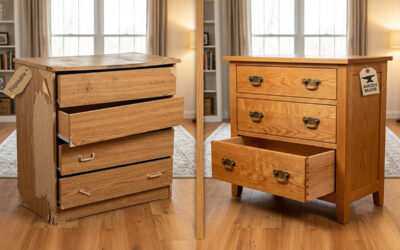
How to repair dog-chewed wood furniture depends on how deep the damage goes. A few shallow teeth marks may only need a simple touch-up, while deep gouges or structural damage may require professional restoration.
We love our pets. They’re family. But when a new puppy decides the leg of your handcrafted Amish dining table is a chew toy, that love gets tested pretty hard. Walking into the dining room to find splintered wood and teeth marks on a piece you spent real money on? Gut punch.
The first reaction is usually panic, followed by the assumption that the table is ruined. Here’s the good news: because you bought solid wood furniture, it almost never is. Veneer or particleboard can’t be sanded down or filled properly. Solid wood can. It can be repaired, refinished, and made to look like nothing happened.
Depending on the severity of the damage, your options range from simple home fixes to professional restoration. Here’s how to figure out what you’re dealing with and how to bring your furniture back.
Assessing the Severity: Cosmetic vs. Structural
Before you grab sandpaper, take a close look at what happened.
Level 1: Surface Scratches and Dents.
If the teeth marks are shallow and the wood fibers are compressed but not actually missing, this is cosmetic. Fixable at home.
Level 2: Gouges and Splintering.
If chunks of wood are gone or the corner of the leg has been gnawed down to a rounded nub, you’ll need filling or reshaping.
Level 3: Structural Damage.
In rare cases, large dogs can chew through a good portion of a spindle or a thinner leg. If the table wobbles, don’t try to fix it yourself. You need a professional to replace the component.
DIY Options for Minor Damage
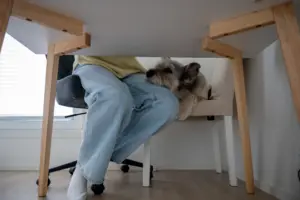
If the damage is Level 1 or mild Level 2, you can probably handle it yourself.
The Steam Trick for Dents
If the wood is dented but not broken, steam can sometimes swell the fibers back into place.
- Place a damp cloth over the dent.
- Gently touch a hot iron to the cloth for a few seconds.
- The steam penetrates the wood and expands it.
This works best on unfinished wood, but it can work on finished pieces if you’re careful. Go too long with the iron, and you’ll get blushing (white marks on the finish).
Wax Sticks and Markers
For scratches that break the finish, wax fill sticks from the hardware store can fill the void. Pick a color that matches your stain, rub the stick over the scratch, level it with an old credit card, and buff it smooth.
When to Call a Professional
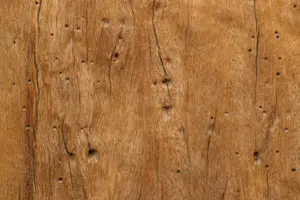
For deep chewing damage on fine Amish furniture, a DIY patch job will often look like… a patch job. The catalyzed varnish on Amish pieces is durable and hard to match with over-the-counter products.
A professional furniture restorer in Texas can do things that simply aren’t possible at home.
- Epoxy Filling and Grain Painting. Pros use specialized wood epoxies to rebuild the leg’s missing shape. Once it hardens, they sand it to match the original profile. Then they hand-paint grain lines onto the epoxy so it blends with the surrounding wood.
- Lathe Work. If a leg is severely damaged, a woodworker can remove it and turn it on a lathe to smooth out the damage (making the leg slightly thinner but uniform), or turn a brand-new leg to match the others exactly.
- They can strip the damaged area and spray a professional-grade lacquer or varnish that matches the original factory finish’s sheen and durability.
Preventing Future Chewing
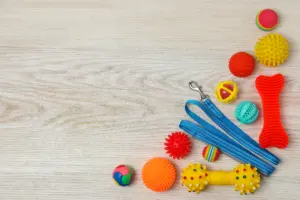
Fixing the damage is one step. Keeping it from happening again matters just as much.
- Provide appropriate chew toys for your pet.
- Use bitter-tasting deterrent sprays on the lower legs of furniture.
- Increase exercise and mental stimulation for younger dogs.
- Block access to furniture during training phases.
For rooms where pets spend time unsupervised, consider adding protective leg wraps until the chewing behavior stops.
Caring for Repaired Wood Surfaces
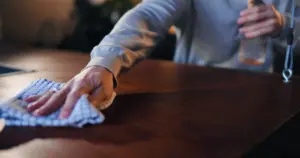
After a repair, consistent care helps the fix hold up and keeps the overall finish looking good.
- Dust regularly with a soft microfiber cloth.
- Avoid harsh cleaners or too much moisture.
- Keep indoor humidity stable to prevent wood movement.
- Use protective pads under decorative items on repaired surfaces.
Solid wood responds well to routine care. A well-done repair can last for years without anyone noticing it.
Frequently Asked Questions (FAQs)
Can I just use wood filler from the hardware store?
You can, but standard wood filler doesn’t take stain the way solid wood does. It tends to look like a solid, opaque patch. That’s fine for painted furniture, but on stained Amish oak or cherry, it’ll stand out. Professional fillers are designed to be translucent and accept stain.
How much does professional repair cost?
It varies. A small touch-up might run $100 to $200. Rebuilding a chewed leg or refinishing a tabletop could cost several hundred dollars. But compared to replacing a $3,000 Amish table, repair is almost always the better financial move.
Will the repair be invisible?
A good restoration is what restorers call “socially invisible.” From a normal standing distance during everyday use, nobody will notice. If you get on your hands and knees with a flashlight, you might spot a slight variation in the grain, but the repair will blend into the piece’s character.
How do I stop my dog from chewing it again?
This is the most important question. Before you repair anything, address the behavior. Bitter apple spray on the furniture legs works well (test a small spot first to make sure it doesn’t damage the finish). Provide plenty of appropriate chew toys. Crate training or baby gates to keep the dog out of the dining room when unsupervised is the only guaranteed solution.
Can chew marks on solid wood be completely removed?
In many cases, yes. Light chew marks can often be sanded and refinished. Deeper gouges need to be filled and color blended. How invisible the final result looks depends on the severity and the skill of the person doing the repair.
Is it worth repairing one table leg, or should I replace the whole piece?
With solid hardwood furniture, repairing or replacing a single leg is usually practical and cost-effective. Replacing the entire piece rarely makes sense unless the structural integrity is compromised beyond what a repair can fix.
Will a repair affect the value of my furniture?
A quality repair by a professional can preserve both appearance and value. Amateur repairs with mismatched stain or uneven surfaces can hurt the look. If you’re unsure, talk to a specialist before attempting it yourself.
Can veneer furniture be repaired the same way?
Veneer is much thinner than solid wood. Deep chew damage can expose the underlying substrate, which is much harder to fix cleanly. This is one of the real advantages of solid Amish hardwood: it can take damage and come back from it.
How long should I wait before refinishing after pet damage?
Sooner is better. Chew marks can splinter and get worse over time. If you’re not sure how to handle the repair, schedule a consultation rather than risk further damage by waiting.
Solid Wood is Built to Survive This

The thing about solid wood is that it’s tough. It can survive toddlers, teenagers, and yes, puppies. A chewed leg is frustrating, but it’s not the end of the road for your furniture. Knowing how to repair dog-chewed wood furniture can help you avoid replacing an otherwise valuable solid wood piece.
Whether you go with a light touch-up, professional spot repair, or a full component replacement, acting quickly protects both the structure and the appearance. At Amish Oak in Texas, we get that life happens. We can connect you with local craftsmen who do this kind of restoration work, so your table stays at the center of your home for a long time to come.