Moving Amish furniture in Texas takes more care than simply loading it into a truck and placing it in storage. Hand-cut dovetails, mortise-and-tenon joints, and solid hardwood construction make these pieces exceptionally durable, but wood remains sensitive to extreme heat and humidity.
Texas does not forgive storage mistakes. Summer temperatures routinely exceed 100°F, while humidity can swing sharply after storms. Without proper preparation and climate-controlled storage, tabletops can warp, joints can loosen, and finishes can crack.
A standard storage unit in Texas can hit 130°F in July. At those temperatures, even well-built furniture starts moving, tabletops cup, drawer frames, racks, and glued joints lose their grip. Once a joint separates or a top cracks down the grain, you’re looking at a repair, not a quick fix. Getting storage right takes the same attention you gave to buying the piece.
The Threat: What Heat and Humidity Do to Solid Wood
Solid wood is hygroscopic; it pulls moisture from the air when humidity rises and releases it when humidity drops. That exchange is what keeps wood dimensionally stable in a normal interior. The problem in Texas is the speed and scale of the swings. A non-climate-controlled metal storage unit can shift 40 degrees in a single afternoon as clouds move through, forcing the wood to respond faster than its structure can accommodate.
That stress causes predictable failures:
- Warping and cupping: Tabletops and wide panels expand and contract unevenly when the top face sees different humidity than the bottom. The result is a surface that rocks on a flat floor.
- Cracking: When wood dries out rapidly, it shrinks. If it shrinks faster than the surrounding material allows, it splits, usually straight along the grain on the widest boards.
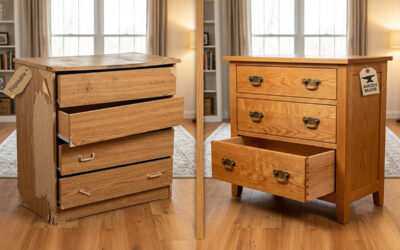
- Joint failure: Mortise-and-tenon and dovetail joints are cut to tight tolerances. Repeated expansion and contraction loosen those fits, and once a joint gaps, glue alone won’t hold it long-term.
- Finish damage: Catalyzed conversion varnishes, the standard Amish finish, are tough, but sustained heat above 120°F can cause them to cloud, crack, or peel. A damaged finish leaves the wood underneath exposed to the next humidity cycle.
Each of these failures is preventable. The target is simple: keep the storage environment close to what the furniture experienced in your home, roughly 65-75°F and 35-55% relative humidity.
The Solution
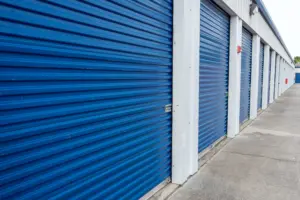
Climate-controlled storage is the non-negotiable baseline for solid wood in Texas. Look for a unit that holds 65-75°F year-round and keeps relative humidity between 40-55%, which mirrors typical indoor conditions and gives the wood nothing to react to. It costs more, often $30-$60 per month above a standard unit, but a single repair on a solid cherry dining table can run several hundred dollars. The math is straightforward.
A standard drive-up unit in Texas functions as a wood kiln from May through September, and internal temperatures regularly exceed 130°F when the door stays shut. A climate-controlled unit holds the air between 55°F and 80°F year-round and keeps humidity in check. That consistency matters because solid wood expands and contracts with every temperature and moisture swing; enough cycles, and mortise-and-tenon joints crack, drawer boxes warp, and veneers lift at the seams. For furniture you intend to pass down, the extra few dollars a month for climate control is not optional.
Preparation and Packing Before Moving Amish Furniture
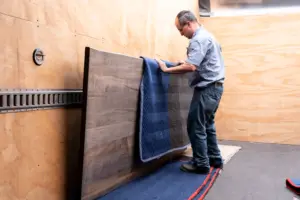
Once the unit is secured, how you prep the furniture determines how it comes out.
- Clean Thoroughly: Wipe down every surface before anything goes into storage. Dust and oil residue provide food for mold and a landing pad for pests. Use a soft, lint-free cloth dampened with a mild soap-and-water solution to clean greasy spots, then let every surface air-dry completely. Storing furniture even slightly damp accelerates finish damage.
- Disassemble When Practical: Take apart what you reasonably can. Pull table legs, remove bookcase shelves, detach headboards. Smaller components are easier to carry and put far less torque on joints during a move. Drop all the screws and bolts into a labeled zip-lock bag, then tape the bag directly to the largest piece it belongs to. You will thank yourself at reassembly.
- Wrap for Protection, Not Suffocation: Plastic wrap and shrink-wrap are the wrong choice for wood furniture. Both seal in humidity, and a wrapped piece sitting in a warm unit will sweat; that trapped moisture feeds mold and lifts the finish within weeks. Use breathable materials instead: old cotton sheets, moving blankets, or furniture pads. They guard against dust and dings without cutting off airflow.
- Lift, Never Drag: Always lift furniture completely off the ground when moving it. Even dragging a heavy piece a few feet concentrates all that weight on the legs and joints, and that stress can crack a mortise that looks intact until you go to reassemble it.
FAQs
Is a climate-controlled storage unit truly worth the extra cost?
For solid wood furniture in Texas, yes. Climate control typically adds $30-$60 a month over a standard unit, far less than a single repair estimate. Flattening a warped tabletop, when a woodworker can even manage it, often costs more than six months of upgraded storage fees. For a piece you cannot replace, the math is straightforward.
Can I just store my Amish furniture in my garage or attic for a few months?
Texas garage and attic temperatures can exceed 140°F in summer and drop below freezing in a hard winter, sometimes within weeks of each other. Solid wood moves with every swing, and a few months is enough time for joints to open, drawer boxes to bind permanently, and finishes to crack. We see the results regularly, and they are rarely reversible.
What is the best way to place my furniture inside the storage unit?
Get everything off the concrete floor. Pallets work well; a few 2x4s laid flat accomplish the same thing. Concrete wicks moisture, and direct contact also eliminates airflow underneath the piece. Leave a few inches between furniture items and between your furniture and the unit walls. That gap lets air circulate and prevents damp spots from forming against the wood. Do not stack anything heavy on top of solid wood furniture.
I have a solid oak dining table. How should I store the tabletop?
Store it on its longest edge, not flat. Flat storage puts sustained pressure across the entire surface, and if humidity shifts even slightly during that time, bowing sets in. Before you stand it up, wrap it in a moving blanket and make sure it can’t tip or shift. Keep everything off it while it’s stored.
Can I store Amish furniture in a garage or shed in Texas?
Don’t. Texas summers can push garage temperatures above 130°F, and humidity swings of 40 points or more in a single day during storm season are common. That kind of cycling, hot and dry to warm and wet, is exactly what splits joinery and warps table surfaces. A non-climate-controlled space in Texas can do more damage in one summer than decades of normal indoor use.
Is plastic wrap safe for wood furniture if it is only for a few hours?
During the actual move, plastic wrap is fine for keeping blankets in place. The problem starts when it stays on once the furniture is in the unit, even moderate heat turns a wrapped piece into a small oven, and trapped moisture softens finishes fast. Remove it as soon as everything is positioned.
How do I know if the humidity in my storage unit is correct?
Climate-controlled facilities typically hold humidity between 30 and 50 percent, which is the safe range for solid wood. If you’re storing high-value custom pieces, pick up a small hygrometer, under $20 at most hardware stores, and leave it in the unit. Check it on visits. Anything consistently outside that range is worth addressing before you see the effects in the wood.
Should I apply a heavy coat of wax before storing my furniture?
No. Heavy wax softens in heat and traps dust and grit against the finish. Before storage, clean the surface and apply a light coat of quality furniture oil if the wood feels dry, that’s enough. More than that creates problems rather than preventing them.
What should I do if I notice a small crack after storing my furniture?
A small crack, called a “check”, usually means the wood lost moisture faster than it could adjust. Move the piece to a more stable environment first, then consult an Amish furniture specialist before attempting any repair. The right fix depends on where the check is and how the piece was originally finished; filling or staining it yourself can make the repair more visible than the crack.
Storage to Showcase without Stress!
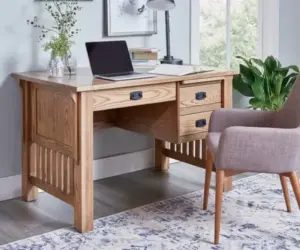
Solid Amish furniture is built to outlast the people who buy it, but only if it’s stored well. A climate-controlled unit, proper wrapping, and a bit of prep time are the difference between pieces that come out of storage looking the same and pieces that need a woodworker. That investment is small relative to the furniture’s value, both in dollars and in what it represents to its owners.
When you’re ready to bring new pieces home or have questions about caring for what you already own, reach out. We’re happy to walk you through it. Contact us today to get started!