Furniture that doesn’t fit can turn an exciting delivery day into a stressful problem. You picked the right wood species, the finish is exactly what you wanted, and the piece looks perfect—until it will not make it through the doorway, around the hallway, or up the stairs.
This happens more often than people think. Usually, the furniture is not the problem. The issue is a missed measurement, a tight turn, a low ceiling, or an access point nobody thought to check.
Knowing what typically goes wrong can save you frustration, especially when buying Amish furniture built to specific dimensions.
The Most Common “Pinch Points”
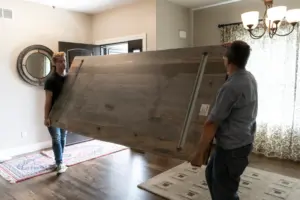
The furniture almost always fits in the room. That’s not the problem. The problem is getting it there.
1. The Front Door Angle
The door itself is usually wide enough (standard exterior doors are 36 inches). But the layout on the other side can be a trap. If there’s a wall right behind the door or a narrow hallway that turns immediately, the furniture can’t make the corner. A 7-foot sofa might slide through the door straight on, but if it has to turn 90 degrees right away, it’s stuck.
2. The Staircase Ceiling
Getting big furniture upstairs is a geometry problem. The issue is usually head clearance. If the ceiling above the staircase is low or has a soffit, a tall bookcase or hutch can’t be tilted enough to clear the steps without hitting the ceiling above.
3. The Hallway Turn
Hallways that turn 90 degrees into a bedroom are the worst. If the hallway is narrow, a long dresser or king-size headboard might not have enough room to swing around the corner and into the room.
How to Measure Like a Pro
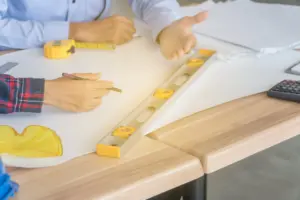
Before you buy anything, grab a tape measure and walk the entire path from the front door to where the furniture is going.
Step 1: Measure the Item
Get the exact height, width, and depth. Also measure the diagonal depth, from the top back corner to the bottom front foot. That diagonal number is the one that matters most when you’re tilting a sofa or tall cabinet around a corner.
Step 2: Measure the Entry
Measure the clear width of every door frame along the path. Keep in mind that the door itself eats up an inch or two of the opening when it’s swung open. Measure the height too.
Step 3: Measure the Obstacles
Look for anything that’s in the way and can’t be moved:
- Low-hanging light fixtures or chandeliers
- Banisters and handrails on stairs
- Radiators or baseboard heaters in hallways
- The distance from the door frame to the opposite wall (this is your turning radius)
The “Sofa Problem”
Sofas cause more delivery headaches than anything else. They’re long, deep, and awkward to maneuver.
- Removable Legs: Check if the legs unscrew. That can buy you 3 to 5 inches of clearance, which is often the difference between fitting and not fitting.
- Removable Feet: For heavy case goods like dressers, check if the bun feet come off.
What to Do If Furniture Doesn’t Fit
If you hit a problem on delivery day:
- Don’t force it. Forcing a piece into place is how you scratch floors and crack door frames.
- Re-measure the room and the furniture carefully.
- Figure out whether the problem is access, clearance, or scale.
- Call your retailer if you think there’s a measurement or spec error.
For minor layout issues, moving other furniture around might solve them. For access problems, partial disassembly can sometimes help, depending on the piece.
FAQs
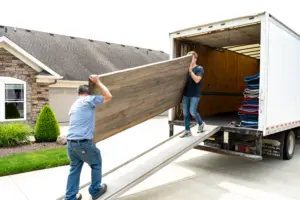
What happens if the furniture really won’t fit?
If the delivery team decides there’s no way to get it in without damaging the furniture or your home, they’ll stop. The piece goes back to the warehouse. You may owe restocking fees or delivery charges. In rare cases, a hoisting service can lift items through a large window or balcony, but that’s expensive and not always an option.
Can Amish furniture be taken apart?
Some large pieces are built in sections. Entertainment centers and china hutches often come as a top and a bottom. Dining tables almost always have removable legs or pedestals. But sofas, dressers, and armoires are usually solid units. Always ask before you buy which parts can be separated.
Does the delivery team remove doors?
Most professional teams can pop the pins out of standard door hinges if they need the extra space. That gives you another 1 to 2 inches. They typically won’t remove sliding glass doors, windows, or banisters, though, due to liability concerns.
Is there a standard size for interior doors?
Exterior doors are usually 36 inches. Interior doors for bedrooms and bathrooms are often narrower, typically 30 or 32 inches wide. Don’t assume they’re the same width as your front door. Measure every single one.
Can Amish furniture be disassembled for tight spaces?
Some can. Tables with removable tops, hutches in multiple sections, things like that. But many solid-wood cabinets are built as single units for structural strength. Ask about disassembly options before you commit to a purchase.
How much clearance should I allow around furniture?
For main walkways, aim for at least 30 to 36 inches. Behind dining chairs, you want about 24 inches so people can push back comfortably. These numbers shift depending on the room and how you use it.
What if my custom furniture doesn’t match the agreed-upon dimensions?
Check your signed specs against what was delivered. If the numbers don’t match, contact your retailer right away. Any reputable seller will work with you to fix a documented error.
Why doesn’t my cabinet sit flush against the wall?
Walls are almost never perfectly straight. Baseboards, uneven drywall, and minor construction quirks can all create small gaps. That’s a house problem, not a furniture problem.
Can humidity really affect how furniture fits?
Yes. Solid wood expands and contracts as humidity changes. The movement is usually small, but in tight spaces, you might notice it. Keeping your indoor humidity stable helps maintain consistency.
Planning Prevents Installation Frustration
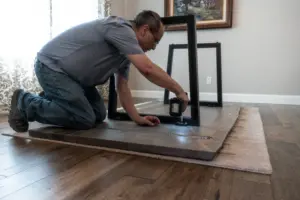
If you’re concerned about a tight corner, narrow stairwell, or difficult doorway, take photos and measurements before you order. Bring them to the Amish Oak showroom, and our team can help compare the furniture dimensions against your space and delivery path.
A few minutes with a tape measure can prevent a failed delivery, damaged trim, or a piece that simply will not fit in the room. Contact Amish Oak today for help choosing furniture that fits your home before delivery day arrives.