A wobbly table can turn one of the most-used pieces in your home into a daily frustration. Whether it rocks during dinner, shifts when someone leans on it, or feels unstable every time you sit down, the good news is that most wobbly table fixes are simple once you know the cause.
Some solutions are temporary, like adding a felt pad under one leg. Others are more permanent, such as tightening hardware, repairing joinery, or addressing damage to the leg itself. Before you reach for a folded napkin, it helps to diagnose whether the issue is coming from the table or the floor.
Wobbly Table Fixes That Actually Last

Before you can choose the right fix, you need to know what is causing the wobble. Some tables only need a small adjustment under one leg, while others need tightened hardware or repaired joints. Start by checking whether the problem is coming from the table itself or the floor beneath it.
A simple way to check is to move the table to a different spot in the room, or even to a different room altogether. If the wobble disappears, the problem is your floor. Many homes, especially older ones, have floors that are not perfectly level. If the wobble persists wherever you put it, the issue is with the table’s structure.
The Fix for an Uneven Floor

For a quick, temporary fix, a folded piece of cardboard or a felt furniture pad under the short leg will do the trick. For a more permanent and elegant solution, you can use adjustable leg levelers. These are small, threaded feet that can be installed at the bottom of the table legs, allowing you to fine-tune each leg’s height to match the contours of your floor.
Diagnosing the Table
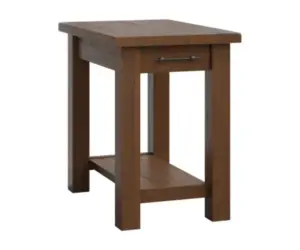
If you have determined that the table itself is the source of the wobble, the next step is to examine its joints. The joints are where the legs and aprons, the frame that sits just under the tabletop, come together. This is where most wobbles originate.
Loose Hardware
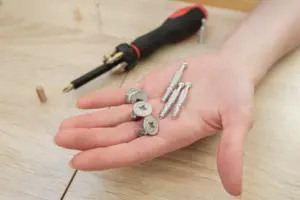
Many tables are assembled with bolts or screws that hold the legs to the apron. Over time, as the wood naturally expands and contracts with changes in temperature and humidity, this hardware can become loose.
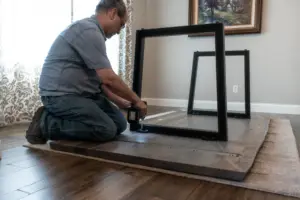
This is often the easiest permanent fix. Simply turn the table upside down or on its side and, using the appropriate wrench or screwdriver, tighten all the bolts and screws. You do not need to overtighten them, just make them snug. Check the table for stability and repeat if necessary. This simple maintenance, done once a year, can prevent most wobbles before they even start.
Failing Joinery
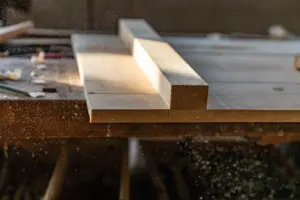
In well-crafted furniture, like the pieces we build at Amish Oak, the joints are often held together with more than just hardware. They use traditional woodworking techniques such as mortise-and-tenon joints, in which one piece of wood is shaped to fit snugly into a hole in another. These joints are incredibly strong, but in lower-quality furniture, the glue holding them together can fail over time.
The Fix

This is a more involved repair. It requires carefully taking the joint apart, cleaning out the old glue, applying new, high-quality wood glue, and clamping the joint tightly until the glue dries completely. While it’s a bigger job, it’s a permanent solution that restores the table’s original strength and stability.
When the Problem Is the Leg Itself
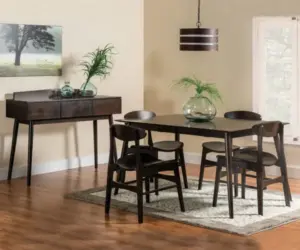
Sometimes, the wobble does not come from a loose joint but from a damaged leg. This could be a split in the wood or a break where the leg attaches to the table.
A split leg can sometimes be repaired by injecting wood glue into the crack and clamping it tightly. However, if the damage is severe, the best solution is often to have a new leg crafted. This is where the value of custom, handcrafted furniture really shines. A skilled woodworker can create a replacement leg that perfectly matches the style, wood, and finish of your original table, seamlessly restoring its beauty and function.
FAQs
Why did my brand-new solid wood table start to wobble?
This is often due to the wood acclimating to your home’s humidity. As the wood settles, hardware can become slightly loose. A quick tightening of the leg bolts is usually all that is needed.
Is it safe to use a “wobble wedge” or a folded napkin permanently?
While it is a fine temporary solution, it does not address the underlying problem. If the wobble is caused by a loose joint, it will likely worsen over time. It is always better to find and fix the root cause.
Can I prevent my table from wobbling?
Yes. The best prevention is to check and tighten the hardware on your table about once a year. Also, avoid dragging the table when you move it, as this puts a lot of stress on the leg joints.
What kind of glue should I use for a joint repair?
A high-quality wood glue is the standard for furniture repair. It creates a bond that is stronger than the wood itself.
When should I call a professional for help?
If you are not comfortable disassembling a joint or if you suspect the wood itself is damaged, it is always a good idea to consult a professional furniture repair specialist or the original craftsman.
The Mark of Quality
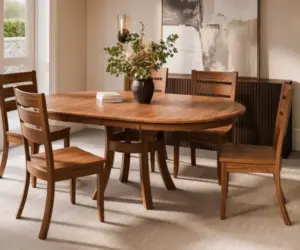
A wobbly table can be a source of frustration, but it’s rarely a sign that the table is beyond repair. More often, it’s simply a sign a small adjustment is needed. In fact, the ability to be tightened and maintained is one of the hallmarks of well-built furniture.
At Amish Oak, we craft our tables with joinery and hardware that are designed to be strong, stable, and serviceable for a lifetime. We believe that a piece of furniture should be a steady, reliable presence in your home. And with a little bit of knowledge and care, you can ensure that your table remains the solid, unwavering heart of your home for generations to come.